
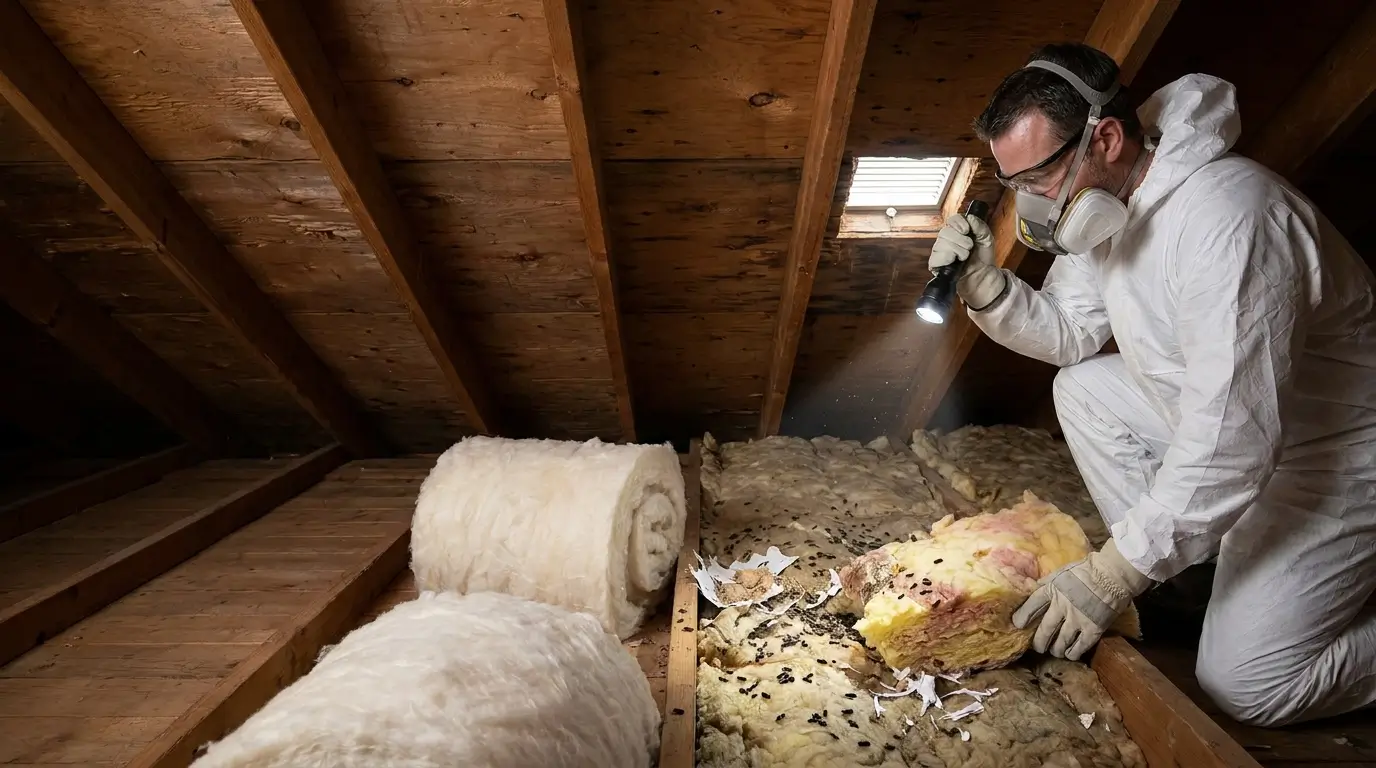
Attic insulation is one of the first things rodents damage. Mice and rats tunnel through it, nest in it, and use it as a toilet. Once the animals are gone, many homeowners are left with one big question: can the insulation stay, or does it need to come out?
The answer depends on how much contamination there is, what type of insulation you have, and whether the rodents have been dealt with. This guide covers how to judge the damage, why it matters for your home’s comfort and air quality, and when to get help.
Why Rodent-Damaged Insulation Matters
Insulation only works when it is fluffy, even and undisturbed. Rodents ruin all three:
- Reduced performance: Tunnels, matted areas and bare patches let heat escape in winter and enter in summer. In the Pacific Northwest, that can mean a colder, damper house through the wet season.
- Contamination: Droppings and urine soak into insulation and are hard to clean once embedded.
- Odors: Urine and decay can leave a lingering smell that drifts into living spaces.
- Moisture and mold risk: Compressed, soiled insulation holds moisture more readily, especially if there are roof leaks or poor ventilation.
- Attractiveness to future pests: Old nesting and scent trails can draw rodents back.
Our page on attic cleanup explains how these pieces fit together.
Before You Replace Anything: Deal With the Rodents
Replacing insulation while rodents are still active is a waste of effort. New insulation will be tunneled and soiled again. Confirm that:
- The rodents have been removed or are no longer active.
- The entry points have been found and sealed. See rodent exclusion for how that works.
- Any roof leaks, ventilation problems or moisture sources have been addressed.
If you still hear scratching or see fresh droppings, the first step is rodent control, not cleanup.
Signs Your Insulation Should Be Replaced
Widespread Droppings and Urine Staining
A few scattered droppings on top of insulation can sometimes be removed. When droppings are deep in the material, or when you see dark urine stains and crusted patches, replacement is usually the safer choice. Mouse droppings are about 1/8 to 1/4 inch and pointed; rat droppings are about 1/2 to 3/4 inch and blunt. Large amounts of either are a sign of heavy contamination.
Nests and Shredded Material
Ball-shaped or layered nests made of insulation, paper and fabric mean the area has been used for breeding. Nest zones are typically heavily contaminated.
Tunnels and Compressed Areas
If the insulation is riddled with channels or has been flattened into runways, it will not insulate properly even if it looks clean.
Persistent Odor
A musty, ammonia-like or rotting smell that does not fade after cleanup often means contamination is deep in the material.
Dead Animals or Decomposition
If an animal died in the insulation, the material under and around it usually needs to come out. Our guide on dead rat smell removal covers this in more detail.
Moisture, Stains or Mold
Damp, discolored or moldy insulation should be replaced and the moisture source corrected.
When Insulation May Be Salvageable
Insulation does not always need replacing. It may be possible to keep it if:
- Contamination is limited to small, isolated areas that can be removed and patched
- The material is dry, fluffy and has not been matted down
- There is no strong odor
- There are only a few droppings on the surface
Even then, treat the work with care. Spot removal still involves handling rodent waste, so the same safety steps apply.
Does Insulation Type Matter?
- Fiberglass batts and blown fiberglass: Rodents tunnel and nest in them readily. Once soiled, they are difficult to clean and are commonly removed.
- Blown-in cellulose: Loose and easy for rodents to burrow in, and it absorbs urine, so contaminated areas are often removed.
- Spray foam: Less attractive for nesting, but rodents may still gnaw on it, and it can hide damage behind it.
- Rigid foam board: Can be chewed but generally resists contamination better.
A provider or insulation contractor can assess your specific material and condition.
Safe Handling: What Homeowners Should Know
Rodent waste can carry germs. The Washington State Department of Health and the CDC advise people to avoid stirring up dust from droppings and nests. As a general rule:
- Never dry sweep or vacuum droppings or insulation contaminated with waste.
- Ventilate the space before working.
- Wear gloves and a respirator rated for fine particles.
- Wet droppings with a disinfectant before wiping them up.
- Bag and dispose of waste according to local guidance.
Our safe rodent dropping cleanup guide provides step-by-step detail, and our hantavirus guide explains why careful handling matters, especially with deer mice.
Because attic insulation removal can stir up a lot of dust, many homeowners choose to leave large jobs to trained providers.
What the Replacement Process Generally Looks Like
While details vary by provider, a typical process includes:
- Inspection to identify entry points and map the damage
- Rodent removal and exclusion work
- Removal of contaminated insulation using protective equipment and containment
- Cleaning and disinfecting of surfaces such as joists and the attic floor
- Repair of damaged wiring, ducts or framing, if needed
- Installation of new insulation
Ask what is included, how waste is handled and whether follow-up checks are available.
Tips to Protect New Insulation
- Seal gaps around plumbing, wiring and vents.
- Keep roof vents and soffits screened with sturdy material.
- Trim tree limbs that touch the roof.
- Store boxes off the attic floor in sealed plastic bins, not cardboard.
- Check the attic once or twice a year, especially in fall.
When to Call a Professional
Consider professional help if you:
- See or hear rodents in the attic
- Find more than a handful of droppings or any nesting
- Smell persistent odors
- Notice chewed wiring, which can be a fire hazard
- Are unsure whether the insulation can stay
Electrical damage in particular should be evaluated by a qualified electrician.
Need Help Finding a Provider?
Renton Rodent Control is a referral service that connects homeowners, renters and property managers in Renton and King County with independent pest-control providers where coverage is available. Availability, services and pricing vary by provider and location.
Request a Connection
Quick FAQ
Can I just add new insulation over the damaged insulation? Generally this is not recommended. Covering contaminated material leaves odors and waste in place and does not fix compressed or tunneled areas.
How do I know if the rodents are gone before replacing insulation? Look for a lack of new droppings, noises and gnaw marks over a period of time, and confirm that entry points are sealed. A provider can verify this during an inspection.
Is it safe to remove rodent-contaminated insulation myself? It carries health risks from dust and waste. If you choose to do it, use gloves and a respirator, ventilate, and wet-disinfect rather than sweeping. Many homeowners prefer to hire help for larger areas. See our FAQ for more.
Will rodents come back to new insulation? They can if entry points remain open. Sealing the home is the best protection.
This article is for general education only and is not a substitute for an on-site inspection or professional or medical advice. Renton Rodent Control is an independent referral service and does not provide extermination or repair services.