
● CRAWL SPACE SUB-FLOOR REMEDIATION & EXCLUSION — RENTON, WA
Crawl Space Cleanup & Rodent Control in Renton, WA
Your crawl space can be difficult to inspect, yet signs of rats, mice, damaged insulation, droppings, unpleasant odors, or moisture may indicate a problem beneath your home. Our referral service helps connect Renton property owners with independent providers who can assess crawl-space concerns and discuss appropriate rodent control, cleanup, exclusion, and related repair options.
Sub-Floor Diagnostic Assessment
Safe Bio-Waste Protocol
South King County Referral Network
Assessment, service recommendations, pricing, and work are handled by the independent provider you are connected with.
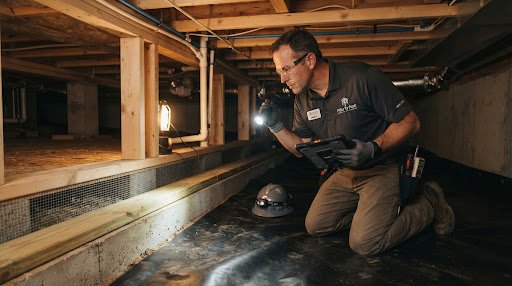
Renton Field Inspection
Evaluating joist bays, ground vapor membrane continuity, and foundation vents for rodent ingress.
What Problems Can Develop in a Crawl Space?
Sub-grade architectural spaces are vulnerable to environmental humidity and biological intrusion. Unchecked conditions quickly migrate upstairs into finished residential areas.
Rodent Activity
Rats and mice may enter through openings around vents, pipes, foundation gaps, or access doors, using the sheltered earth for reproduction and warmth.
Droppings and Nesting Materials
Rodent activity may leave droppings, urine, nesting materials, and debris that require appropriate, bio-safe cleanup to halt secondary contamination.
Damaged Insulation
Rodents, moisture, age, or poor fastening can dislodge and shred fiberglass batts beneath floors, creating thermal leakage and drafts.
Unpleasant Odors
Rodent pheromones, deceased animals inside floor cavities, damp moldy timber, or stagnating soil may contribute to persistent odors in living spaces.
Moisture & Standing Water
Water intrusion and high dampness may require a separate technical evaluation and appropriate sub-surface drainage or moisture-control mitigation.
Entry Points & Structural Gaps
Unsealed openings can provide routes for rodents to enter the crawl space or travel upward into wall cavities and living quarters of the home.
Regional Sub-Floor Note: Crawl spaces vary significantly across Renton. Not every sub-floor exhibits all six conditions, and addressing individual symptoms requires diagnosing root structural causes before undertaking expensive cosmetic replacements.
Warning Signs to Look For
Because crawl spaces are rarely visited, subterranean issues frequently announce themselves indirectly through air drafts, sounds, or localized flooring cold spots.
Diagnostic Note: These signs can have multiple causes. An appropriate assessment by a qualified local provider can help identify the source and determine which services, if any, are needed.
Scratching, rustling, or movement sounds beneath the floor (particularly during quiet nighttime hours).
Rodent droppings, rub marks, or nesting debris gathered near the crawl-space access hatch or outer foundation perimeter.
A persistent musty, damp, or decaying biological odor rising through floor vents or baseboards into living areas.
Sub-floor batt insulation that appears displaced, shredded, hanging loosely between joists, or soiled with amber urine stains.
Visible gaps around perimeter foundation vents, exterior plumbing penetrations, or unlatched sub-grade access doors.
Damp soil, pooling standing water, condensation on joists, or visible efflorescence and water staining on concrete stem walls.
Evidence of rodents entering other parts of the property (such as kitchen toe-kicks, utility closets, or attached garages).
Addressing Rats and Mice in the Crawl Space
Effective sub-floor rodent management involves far more than simply placing traps on the ground. Independent specialists take a systematic, multi-phase structural approach to clear activity and keep rodents from re-colonizing.
Step 1
Activity & Route Intake
Assessing visible signs of rodent activity and mapping subterranean access routes across beams, duct lines, and foundation footings.
Step 2
Targeted Trapping Strategy
Selecting an appropriate trapping or population control approach suited to local conditions and species (Norway rat, roof rat, or field mouse).
Step 3
Foundation Gap Discovery
Pinpointing all exterior foundation openings, degraded mortar, or loose screening that permit continuous sub-floor entry.
Step 4
Structural Exclusion Plan
Recommending heavy-duty mechanical barriers for gaps, such as 1/4″ hot-dipped galvanized hardware cloth, metal flashing, and structural sealants.
Step 5
Cross-Chamber Inspection
Checking for related activity in connected home conduits, including plumbing chases, furnace return plenums, and vertical wall cavities.
Step 6
Monitoring & Verification
Discussing follow-up monitoring intervals, bait station checkups (if used), and scheduled perimeter checks when appropriate.
Ready to discuss your crawl space with an independent local pro?
We match King County property owners with vetted, licensed exclusion and cleanup companies.
Crawl Space Cleanup and Contaminated Materials
A crawl space affected by rodents often contains accumulated waste, pheromone trails, and biological matter that must be handled safely to preserve indoor air quality.
Droppings and Nesting Debris
Rodent-contaminated materials require careful containment and antimicrobial sanitization.
Critical Warning: Dry sweeping or vacuuming droppings can stir contaminated particles and pathogens into the breathing air and must be avoided.
Dead Rodents and Odors
Decomposing carcasses trapped in joist cavities or beneath plastic vapor sheeting generate intense odors and secondary insect infestations. The physical source must be identified and removed before deodorizing treatments can succeed.
General Debris Removal
Old construction offcuts, fallen insulation scraps, abandoned cardboard boxes, and accumulated crawl waste provide harborage for pests and obstruct thorough sub-floor inspections. Full haul-away is evaluated per job.
Confined Space & Safety Protocol
Avoid entering a heavily contaminated or low-clearance crawl space without appropriate PPE. Independent providers utilize HEPA filtration, negative-pressure fans, and certified respirator equipment for comprehensive cleanups.
Health Guidelines & Agency Precautions
Cleaning procedures should align with Washington State Department of Health (DOH) and CDC recommendations for vector-borne disease containment (e.g. hantavirus and lymphocytic choriomeningitis). These standards stipulate wet-misting with EPA-registered disinfectants before handling rodent remnants.
When Does Crawl Space Insulation Need Attention?
Sub-floor batt insulation acts as both thermal resistance and, unfortunately, an ideal nesting incubator for rodents if gaps exist.
Step 1
Inspect the Condition
Determine whether sub-floor batt insulation remains fully intact, structurally fastened, contaminated with biological waste, or compressed by ground moisture.
Step 2
Assess the Needed Work
Some sound insulation may simply need re-securing with wire stays, while heavily saturated, compressed, or feces-contaminated batts warrant careful extraction and bagging.
Step 3
Consider Related Issues
Before installing fresh insulation, it is critical to resolve external rodent entryways and sub-floor humidity; otherwise, newly installed batts will be ruined immediately.
Crawl Space Vapor Barriers and Moisture Control
The Pacific Northwest climate delivers significant wet-season rainfall. Soil moisture evaporating beneath a residence can accelerate wood rot and create ideal burrowing grounds for Norway rats.
Checking for torn, unpinned, or displaced 6-mil+ black polyethylene sheeting.
Assessing visible damp soil, pooling puddles, or drainage flow along interior footing trenches.
Discussing perimeter French drains, sump pump basins, or gravity relief systems if water intrusion is severe.
Evaluating standard ground vapor barrier replacement versus total sealed encapsulation systems.
Service Distinction: Rodent exclusion and drainage engineering are related but distinct technical scopes. Independent providers will specify whether moisture issues require specialized civil drainage or standard containment sheeting.
Standard Barrier vs. Full Encapsulation
6-Mil Ground Vapor Barrier
Covers bare earth to reduce ground moisture evaporation into the sub-floor framing. Seams are overlapped by 12 inches and staked to ground. Ideal for basic moisture control and hygiene.
Heavy Duty Sealed Encapsulation
Reinforced 12–20 mil multi-ply liners run across the floor and up concrete stem walls, sealed airtight with dedicated mastic and dehumidification. Best for chronic dampness or conditioned crawl spaces.
Preventing Rodents From Returning
Trapping alone creates a temporary vacuum. Lasting crawl space protection hinges on physical structural exclusion that closes access paths permanently.
Foundation Vent Screens
Installing 1/4″ hot-dipped galvanized mesh over degraded foundation air grates where rats chew through thin builder-grade aluminum screens.
Crawl Access Hatch Doors
Securing, weather-stripping, and fabricating chew-proof exterior access hatches that sit tight against concrete foundation wells.
Utility Penetrations
Sealing annular openings around water supply lines, sewer mains, electrical conduit sleeves, and HVAC line sets with metal escutcheons and mortar.
Sill Plate & Foundation Cracks
Closing settlement voids between the top of concrete foundation walls and wood mudsills where mice squeeze through gaps as narrow as 1/4 inch.
Duct Boots & Floor Openings
Sealing sub-floor penetrations where flexible heat ducts transition into register boxes, preventing sub-floor rodents from jumping into living rooms.
Perimeter Habitat Reductions
Advising property owners on exterior perimeter clearance, including pulling mulch away from foundations and removing low cedar hedges.
How the Process Works
Connecting with an independent sub-floor remediation professional in Renton is straightforward, transparent, and structured.
Step 1
Tell Us About the Problem
Describe sounds beneath the floorboards, foul smells, insulation issues, water seepage, or seen rodent activity.
Step 2
Request a Connection
Submit your contact details and Renton address to connect with an independent contractor covering your specific neighborhood.
Step 3
Arrange an Assessment
The matched specialist contacts you directly to review accessibility, safety parameters, and schedule an on-site evaluation.
Step 4
Review Recommended Work
Receive an itemized scope of recommended services (trapping, exclusion repairs, insulation removal, or vapor membrane).
Step 5
Confirm Pricing & Schedule
The independent provider confirms all project pricing, terms, warranties, and calendar timetables before any work begins.
Step 6
Follow-Up & Prevention
Review post-service barrier integrity, ongoing exterior bait station needs, and preventative property maintenance guidelines.
Note: This is a general service workflow illustration. Not all independent providers provide every specific service listed above.
Matching the Problem With the Right Service
Sub-floor challenges can involve pest control, sanitation, carpentry, or environmental moisture. Here is how observed conditions translate into service discussions.
| Observed Concern | Possible Service to Discuss |
|---|---|
| Active rat or mouse activity beneath home | Rodent assessment, trapping setup, and population knockdown |
| Droppings, nesting debris, or urine odors | Bio-safe crawl space cleanup, HEPA vacuuming, and sanitization |
| Pervasive dead rodent odor | Source identification and carcass extraction (where accessible) |
| Damaged, shredded, or soiled insulation | Insulation inspection, removal, bagging, and replacement |
| Open foundation vents or structural gaps | Galvanized hardware mesh exclusion and masonry/wood repairs |
| Damp soil, standing water, or condensation | Moisture inspection, sump pump inquiry, or drainage consultation |
| Torn, missing, or rat-burrowed vapor barrier | Vapor barrier inspection, re-pinning, or full membrane reinstallation |
| Multiple compounded crawl-space concerns | Holistic assessment prioritizing health, sealing, and thermal restoration |
Providers establish actual service necessity, feasibility, and specific materials during direct on-site review.
Crawl Space Concerns for Renton Properties
Different ownership situations require tailored diagnostic focus, documentation, and coordination.
Renton Homeowners
Eliminate scratch noises in subfloors, resolve mystery odors, lower winter heating losses through damaged floor batts, and protect family health from rodent allergens.
Landlords & Managers
Quickly satisfy Washington tenant habitability statutes by documenting reported pest issues, scheduling contractor access, and getting transparent scopes in writing.
Buyers & Sellers (Real Estate)
Respond to Form 17 disclosures and home inspector flags regarding rodent droppings or fallen insulation with prompt remediation estimates to keep escrow moving.
What Affects Crawl Space Cleanup and Rodent Control Costs?
Every sub-floor footprint is unique. Pricing varies based on tangible job site factors rather than arbitrary flat fees.
Clearance & Accessibility
Low-clearance crawl spaces (under 24 inches) require tight belly-crawling and specialized equipment compared to walk-in basements.
Species & Infestation Severity
Heavy Norway rat burrowing under the foundation requires more extensive exclusion hardware than mild house mouse ingress.
Contaminated Material Volume
The square footage of soiled fiberglass batts, old ground plastic, and accumulated storage debris that must be bagged and disposed of.
Framing Sanitization Needs
Applying EPA-approved botanical or hospital-grade enzymes across joists and subfloor sheathing to eliminate urine salts and bio-pheromones.
Exclusion Complexity
The total count of foundation air vents, sill plate seams, pipe stub-outs, and crawl access doors requiring permanent custom metal reinforcement.
Moisture & Membrane Options
Whether the project calls for basic replacement 6-mil black plastic or multi-ply taped encapsulation and sump systems.
Accurate quotations come from the provider
Accurate quotations are provided directly by independent professionals following a physical site assessment.
Why Early Assessment Can Be Helpful
Delaying action in a crawl space almost always results in deeper structural contamination, higher utility bills, and higher eventual remediation expenses.
Understand the Source
Differentiate between rodent feces, mold from damp soil, or plumbing leaks before spending money on temporary masking sprays.
Plan the Right Work
Avoid installing new underfloor insulation that will just get soiled again by ensuring exclusion is performed first.
Reduce Repeat Access
Seal critical entry points before incoming breeding pairs establish nested burrows and birth new litters under your home.
Protect Structural Assets
Prevent rodents from gnawing on subfloor electrical cables, flexible PEX water pipes, and flexible furnace ducting.
Crawl Space Services in Renton, Washington
From the damp lowlands surrounding the Cedar River and Lake Washington south shore to the hillside communities of Talbot Hill and Renton Highlands, local sub-grades face unique environmental conditions. Heavy Pacific Northwest autumn and winter rains saturate Renton’s glacial till soils, driving subterranean moisture and seeking rodents upward into dry residential crawl spaces.
The referral network coordinates coverage across all Renton residential zones:
Renton Microclimates
Older mid-century construction in Kennydale and the Highlands frequently features vented, unconditioned crawl spaces with wood-framed vent covers that have degraded over decades. Modernizing foundation vent screens with heavy steel mesh is often the #1 priority for Renton properties.
Frequently Asked Questions
Direct, practical answers about crawl space pest activity, cleanup protocol, and how our referral directory connects you with independent specialists.
Rats and mice exploit unsealed architectural vulnerabilities around foundation vents, gaps under exterior access hatches, rotted mudsills, or annular openings where plumbing, electrical, and HVAC lines penetrate the foundation. Norway rats are also capable of tunneling under shallow stem wall footings if soil is soft.
Yes. Rodent feces, dried urine, and pheromone nesting materials produce ongoing biological odor and can harbor pathogens. Furthermore, lingering pheromones attract new rodents to the same scent trails even after previous populations are trapped out. Cleaning and sanitizing resets the sub-floor environment.
Not automatically. Trapping, exclusion, bio-cleanup, and insulation installation are distinct scopes of work. Some crawl space providers offer end-to-end full remediation, while others focus specifically on pest extraction and sealing. When you request a connection, you can specify if insulation handling is needed.
Frequently, yes. The sub-floor acts as a transit highway into vertical wall cavities, pipe chases behind bathtubs, kitchen sink plumbing cutouts, and forced-air heating duct registers. Once established beneath the home, rodents routinely explore upwards seeking human and pet food.
No. Standard 6-mil polyethylene plastic is designed exclusively to retard ground moisture evaporation, not prevent animal teeth. Rats easily chew through or burrow beneath vapor barriers. Rodent deterrence requires physical exterior exclusion using galvanized steel mesh and solid structural closures.
No. While full encapsulation (sealing vents, running heavy 12–20 mil liners up stem walls, and installing dehumidifiers) is advantageous in high-moisture settings, many Renton homes function well with clean, properly staked 6-mil ground sheeting paired with free-flowing, well-screened perimeter foundation vents.
Health officials advise against sweeping or vacuuming dry rodent droppings without professional HEPA equipment and N95/P100 respirators due to airborne viral pathogens (like hantavirus). For extensive crawl space contamination, contracting a professional cleanup crew equipped with protective gear is strongly recommended.
Costs vary according to crawl square footage, headroom clearance, volume of soaked insulation requiring removal, extent of exclusion carpentry, and the presence of standing water. Independent contractors formulate written estimates following on-site evaluation of the sub-floor space.
No. Rodent Proofing Renton is an independent referral coordination service. We do not inspect homes, perform physical cleanups, replace insulation, install barriers, or employ field technicians. We connect property owners with independent pest and crawl space specialists in King County where coverage exists.
Need Help With a Crawl Space Problem?
Whether you have noticed rodent activity, unpleasant odors, damaged insulation, or moisture concerns, the first step is understanding what is happening beneath your property. Request a connection with an independent provider where coverage is available.
Assessment, pricing, scheduling, cleanup, rodent control, repairs, and other services are handled by the independent provider you are connected with.