
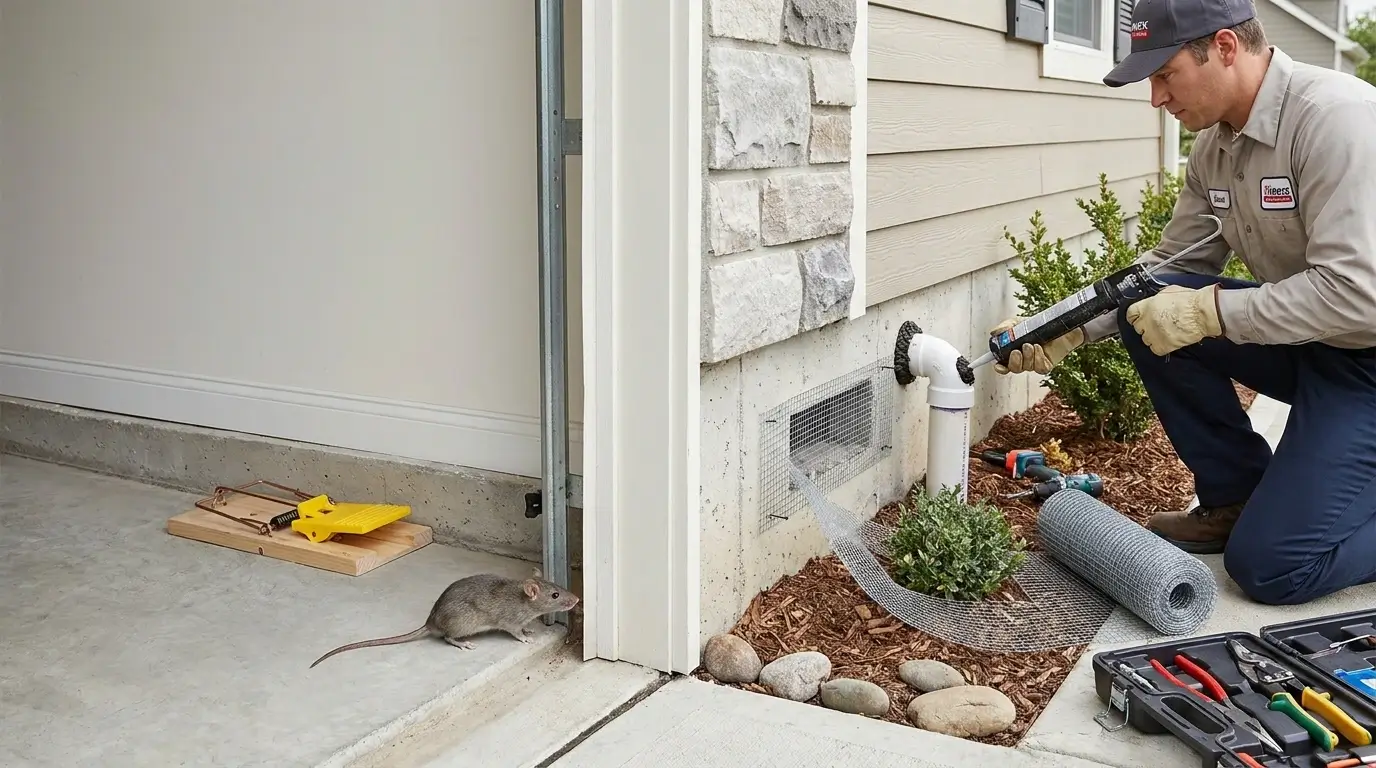
When rats or mice show up, most people think first about getting rid of the ones they can see. Traps and bait feel like action. But if the openings that let rodents in are still there, new animals tend to follow, and the cycle repeats.
That is why pest-control professionals talk about exclusion. It is the part of rodent control focused on keeping animals out, not just removing the ones already inside. This article explains what exclusion is, what it involves, and why it belongs in any lasting plan.
What Is Rodent Exclusion?
Rodent exclusion is the process of finding and sealing the gaps, holes and weak points that rodents use to enter a building, then making those areas resistant to gnawing and re-entry. The goal is to turn your home into a structure that rodents simply cannot get into.
It is built on a few facts about how these animals behave:
- They squeeze through small spaces. Mice can pass through a gap of about 1/4 inch, and rats through about 1/2 inch.
- They chew. Rodent incisors grow continuously, so they gnaw on wood, plastic, soft metal and sealants to enlarge gaps.
- They are drawn to shelter, warmth and food. Western Washington’s wet, cool autumns and winters push rodents toward buildings.
- They return to proven routes. An opening that worked once will be used again.
Why Trapping Alone Isn’t Enough
Trapping, whether with snap traps or other methods, deals with the animals that are present. It does not change why they came. Relying on it alone has predictable weaknesses.
New Animals Move In
If a gap remains, other rodents from the neighborhood can find it. In established parts of Renton with older housing, mature landscaping and nearby greenbelts, there is often a steady supply of rodents looking for a way in.
You May Never Catch Them All
Rodents reproduce quickly. A small, unnoticed population can rebound while you wait for the last trap to fill. Our article on rodent breeding and colony growth covers why this happens.
Traps Don’t Fix Damage
Gnawed wiring, chewed insulation and contaminated spaces remain after the animals are gone. Without sealing, the same damage can restart.
It Can Become a Never-Ending Cycle
Continuous trapping without exclusion can mean months of checking traps while the underlying problem stays unchanged.
The Main Steps of Exclusion
A thorough exclusion job generally follows a sequence.
1. Inspection
A full inspection of the exterior and interior looks for entry points, droppings, rub marks, gnaw marks, nests and runways. Common problem areas in King County homes include:
- Gaps around utility lines and pipe penetrations
- Foundation vents and crawl space openings
- Garage door seals and gaps under exterior doors
- Roofline gaps, soffits and gable vents
- Dryer, bathroom and kitchen exhaust vents
- Gaps where siding meets the foundation
- Openings from chimney flashing and trees touching the roof
2. Identifying the Species
The animal matters. Mice, Norway rats and roof rats behave differently. For example, roof rats climb well and often enter from above, while Norway rats tend to burrow and enter near ground level. Learn more in our pages on the house mouse, Norway rat and roof rat.
3. Removing the Animals First
Sealing before the animals are out can trap them inside, leading to dead rodents in walls and new gnawing as they try to escape. Exclusion typically follows or accompanies removal, often using one-way devices or other methods chosen by the provider.
4. Sealing with Durable Materials
Effective materials are those rodents cannot easily chew: heavy-gauge hardware cloth, metal flashing, copper mesh and similar products, often combined with sealants. Soft materials such as foam, rags or plain caulk alone tend to fail. Our rodent exclusion page gives further detail.
5. Cleanup and Sanitizing
After exclusion, contaminated areas such as attics, crawl spaces and wall voids may need cleanup. See our pages on attic cleanup and crawl space service.
6. Follow-Up
Good providers check that sealed points are holding and that activity has stopped. Rodents sometimes test repairs.
What You Can Do Yourself
You can reduce risk and support professional work with these steps:
- Seal small gaps with appropriate metal-backed materials.
- Install or replace door sweeps and weatherstripping.
- Trim vegetation away from the house and keep branches off the roof.
- Store food in sealed containers and keep pet food put away at night.
- Secure trash and compost with tight lids.
- Reduce clutter in garages, sheds and storage areas where rodents nest.
- Fix leaks and standing water, which attract rodents and soften building materials.
- Keep firewood and debris away from the foundation.
If you find droppings while doing this work, do not dry sweep or vacuum them. Ventilate the area, wear gloves and a respirator, and wet-disinfect. Our guide to safe rodent dropping cleanup explains how, and the Washington State Department of Health and the CDC both recommend wet cleaning over sweeping or vacuuming.
Why Exclusion Pays Off Over Time
Exclusion shifts the approach from reacting to preventing. When it is done well, a property is less appealing and less accessible, and you spend less time dealing with repeat visits. It also helps protect insulation, wiring and stored belongings from ongoing damage.
No method is absolute. Building conditions, neighboring properties and seasonal pressures can still create new openings, so periodic inspection remains wise.
When to Call a Professional
Consider professional help when:
- You hear scratching or see droppings repeatedly despite your efforts
- Entry points are on the roof, in soffits or in hard-to-see areas
- You are dealing with rats, which are larger and harder to exclude
- Trapping keeps catching animals but the activity never ends
- There is damage to wiring, insulation or ductwork
- You want a full inspection that covers the entire building
Need Help Finding a Provider?
Renton Rodent Control is a referral service that connects homeowners, renters and property managers in Renton and King County with independent pest-control providers where coverage is available. Availability, services and pricing vary by provider and location. Request a Connection
Quick FAQ
What is the difference between exclusion and extermination? Extermination focuses on removing animals. Exclusion focuses on sealing entry points so animals cannot return. The two often work best together.
How big a gap can a mouse get through? About 1/4 inch. Rats can pass through gaps of about 1/2 inch.
Can I do exclusion myself? You can handle small, accessible gaps, but roofline work, crawl spaces and hidden entry points are often better left to an experienced provider.
Is exclusion permanent? It can last a long time with durable materials, but it should be rechecked periodically since buildings shift and rodents keep testing.
This article is for general education only and is not a substitute for an on-site inspection or professional or medical advice. Renton Rodent Control is an independent referral service and does not provide extermination or repair services.