
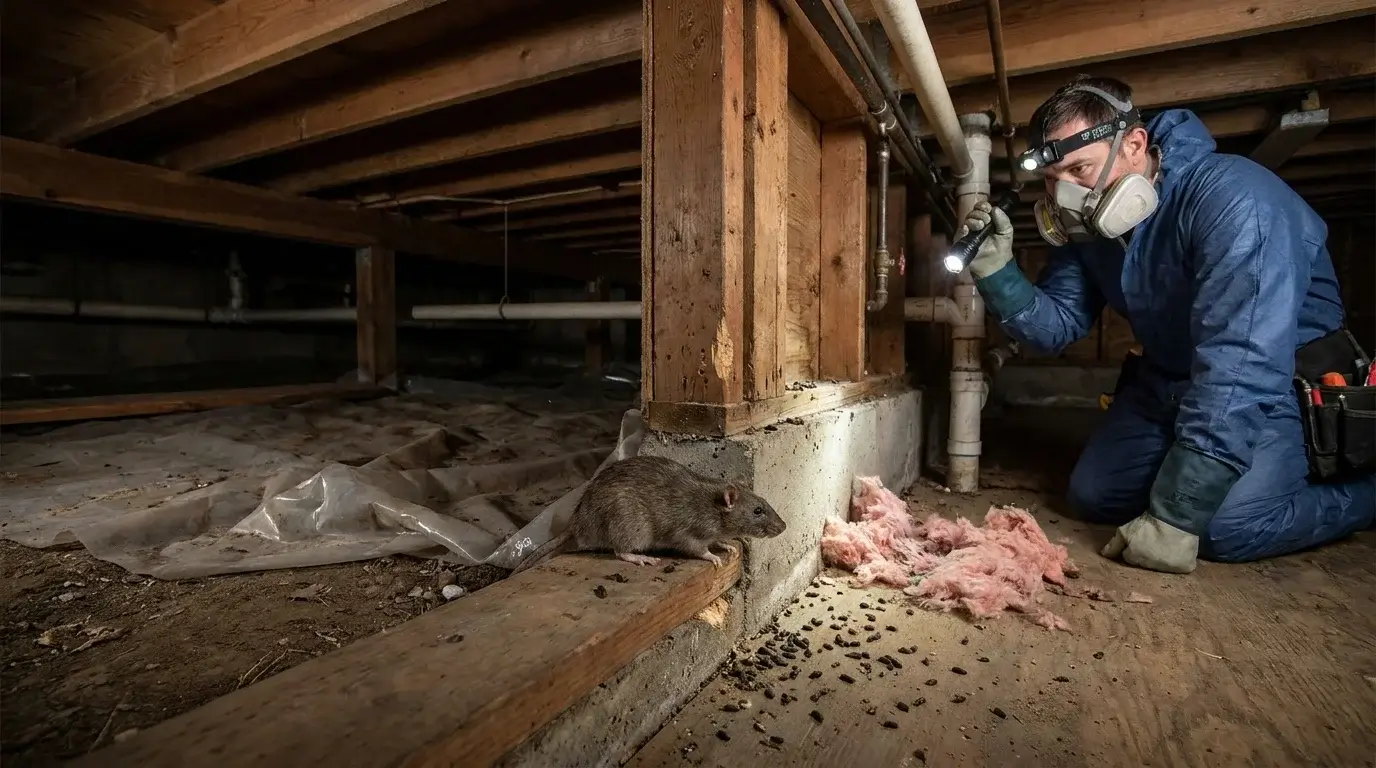
The crawl space is one of the most inviting spots in a Pacific Northwest home for a rat. It is dark, sheltered from rain, often damp, and rarely visited. Pipes, ductwork and insulation give rats warmth and nesting material, and a single gap in the foundation can open the door.
Because most homeowners only look into the crawl space when something goes wrong, rat activity can build for weeks before it is noticed. This guide explains how to tell whether rats are really the problem, what to do (and not do) in the meantime, and when it makes sense to bring in help.
Why Rats Choose Crawl Spaces
In Renton and across King County, the mild, wet climate pushes rodents to look for dry shelter from fall through early spring. A crawl space offers several things at once:
- Shelter and warmth: Heat from the house above and from pipes and ducts keeps the space more comfortable than outdoors.
- Nesting material: Insulation, torn vapor barrier, cardboard and stored fabrics are easy to shred.
- Quiet and concealment: Rats prefer areas with little human traffic.
- Easy access: Rats can squeeze through openings of about 1/2 inch. Damaged foundation vents, gaps around utility lines and broken access doors are common entry points.
In our area the Norway rat (a burrower that often lives at or below ground level) is a frequent crawl space visitor, while roof rats tend to favor higher areas but will move through lower spaces too. You can read more about each on our Norway rat and roof rat pages.
Signs of Rats in a Crawl Space
Sounds From Below
Scratching, scurrying, gnawing or thumping beneath the floor, especially at night, is often the first clue. Rats are heavier than mice, so the sounds tend to be louder and more purposeful. Squeaking or fighting noises can also come through floors and vents.
Droppings
Rat droppings are about 1/2 to 3/4 inch long with blunt ends. Mouse droppings are much smaller, around 1/8 to 1/4 inch and pointed. Finding larger droppings along walls, on top of foundation sills, or near pipes points toward rats. Fresh droppings are dark and moist; old ones are gray and crumbly.
Rub Marks and Runways
Rats travel the same routes repeatedly. Look for greasy smears along beams, pipes and foundation walls, and for flattened paths through dust or insulation.
Gnaw Marks and Damage
Fresh gnawing on wood, plastic pipe, or wiring sheaths looks light and clean; older marks darken. Torn insulation, shredded vapor barrier and chewed duct wrap are also common.
Burrows Near the Foundation
Norway rats often dig. Holes about 2 to 3 inches wide near the foundation, under steps, or beside the crawl space vents can be an entry point or a burrow system.
Odor
A musky, ammonia-like smell from the floor registers or the crawl space access can indicate an established population. A sharper, rotting smell may mean an animal has died in a hard-to-reach spot. See our guide on dead rat smell removal for more.
Is It Rats or Something Else?
Not every noise under the house is a rat. Mice, raccoons, opossums, stray cats and even settling pipes can cause similar sounds. Droppings size, the pattern of damage, and the timing of the noise help narrow it down. If you are unsure, our pages on mouse control and rodent species and diseases explain how the common species differ.
What to Do Right Now
- Do not rush in. Before entering a crawl space where you suspect rats, wear sturdy shoes, gloves and a respirator, and bring a good flashlight. Avoid crawling into tight, wet areas alone.
- Look from the outside first. Walk the foundation and check vents, utility penetrations, the access door and any gaps near downspouts or steps.
- Remove outdoor attractants. Secure garbage, store pet food and birdseed in sealed containers, clear fallen fruit, and cut back vegetation touching the house.
- Fix moisture problems. Leaking pipes, poor drainage or standing water attract rodents and cause damage on their own.
- Take photos. Photos of droppings, gnawing and entry points help a provider assess the situation.
What Not to Do
- Do not seal every opening before you know whether rats are still inside. Trapping animals in a crawl space can lead to dead animals and odor problems.
- Do not dry sweep or vacuum droppings. This can put particles into the air.
- Do not use foggers or random poison placements inside an enclosed space without guidance, because of risks to children, pets and wildlife.
Cleaning Up Safely
Droppings, urine and nesting material can carry germs. The Washington State Department of Health and the CDC both recommend never dry sweeping or vacuuming rodent waste. In general, ventilate the area first, wear gloves and a respirator, and wet droppings with a disinfectant before wiping them up and disposing of them. Our safe rodent dropping cleanup guide walks through the steps. Heavily contaminated insulation is a bigger job; see crawl space services for what that can involve.
Long-Term Prevention
Removing the rats is only half of the job. Lasting results depend on closing the openings and removing what drew them in:
- Screen foundation vents with sturdy, rodent-resistant material.
- Seal gaps around pipes, cables and ducts.
- Make sure the access door fits tightly and is in good repair.
- Keep soil grading sloped away from the foundation.
- Inspect the crawl space at least once or twice a year, especially in fall.
This kind of work is called rodent exclusion, and it is usually the difference between a one-time fix and a recurring problem.
When to Call a Professional
Consider calling a pest-control provider if you:
- Hear or see rats more than once or twice
- Find large amounts of droppings, nesting or chewed wiring
- Notice a persistent odor you cannot trace
- Cannot safely access the crawl space yourself
- Have had rats return after DIY efforts
A qualified provider can inspect the space, identify entry points, and recommend a plan that fits your situation. Our rat removal page explains what is typically involved.
Need Help Finding a Provider?
Renton Rodent Control is a referral service that connects homeowners, renters and property managers in Renton and King County with independent pest-control providers where coverage is available. Availability, services and pricing vary by provider and location.
Request a Connection
Quick FAQ
How can I tell rats from mice under my house? Size is the best clue. Rat droppings are about 1/2 to 3/4 inch and blunt, while mouse droppings are about 1/8 to 1/4 inch and pointed. Rats also make louder noises and leave larger gnaw marks.
Can rats get into a crawl space through small gaps? Yes. Rats can pass through openings of about 1/2 inch, so small foundation cracks, damaged vent screens and gaps around utility lines can be enough.
Are rats in the crawl space a health risk for the rest of the house? Possibly. Droppings and contaminated insulation can affect indoor air quality through floor vents and gaps, and rodents can carry germs. Contact the Washington State Department of Health or the CDC for current guidance on rodent-borne illness. You can also see our FAQ.
Should I seal the entry holes right away? Not until you are confident the rats are gone. Sealing animals inside can cause new problems, so it is best to confirm first or consult a provider.
This article is for general education only and is not a substitute for an on-site inspection or professional or medical advice. Renton Rodent Control is an independent referral service and does not provide extermination or repair services.