
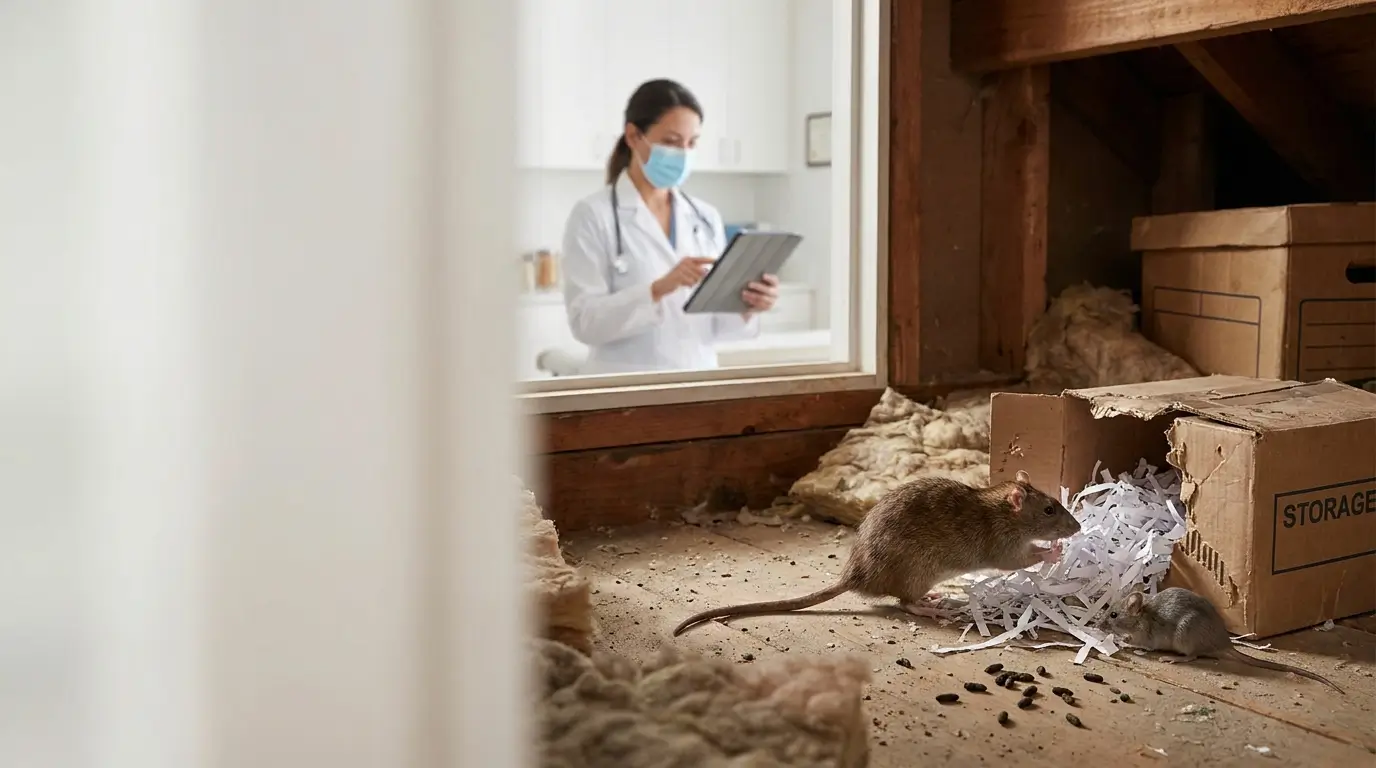
Mice and rats do more than gnaw wires and raid pantries. They can carry germs that affect people, and they spread them through urine, droppings, saliva, bites, contaminated food and surfaces, and sometimes through the parasites that live on them.
Most homes with a few mice never cause an illness, and most people never get sick from rodents. Still, it helps to understand the main routes of exposure so you can reduce risk sensibly. This overview sticks to well-established public-health points; for specific concerns, talk to a doctor or the Washington State Department of Health.
How Rodent-Borne Illness Spreads
Public-health agencies such as the CDC describe several common routes:
- Breathing in particles from dried urine, droppings or nesting material that has been disturbed
- Touching contaminated surfaces and then touching your mouth, nose or eyes
- Eating or drinking food that rodents have contaminated
- Bites or scratches from rodents
- Indirect spread through fleas, ticks or mites that feed on rodents
The safest assumption is that any area with droppings or nests may be contaminated.
Illnesses Commonly Linked to Rodents
Hantavirus
In Washington, deer mice are associated with a hantavirus that can cause hantavirus pulmonary syndrome, a rare but serious respiratory illness. Early symptoms resemble the flu, and breathing problems can follow. Read more in our hantavirus guide and in Hantavirus Symptoms: When to See a Doctor… see the hantavirus guide for details.
Salmonellosis
Salmonella bacteria can be spread when food, countertops or utensils are contaminated with rodent droppings or urine. Symptoms in people commonly include diarrhea, fever and stomach cramps.
Leptospirosis
This bacterial infection can spread through water or soil contaminated with the urine of infected animals, including rats. It is more commonly associated with standing water, flooding or outdoor exposure than with ordinary indoor mouse problems.
Rat-Bite Fever
Despite the name, it can be spread through bites and scratches, and also through contact with contaminated food, water or surfaces. It is a reason to avoid handling wild rodents, including dead ones, with bare hands.
Lymphocytic Choriomeningitis Virus (LCMV)
House mice can carry this virus, which people can be exposed to through contact with rodent urine, droppings, saliva or nesting material. The CDC notes it can be a particular concern during pregnancy, so anyone who is pregnant should talk with a healthcare provider about rodent exposure.
Allergens and Asthma Triggers
Even without infection, rodent dander, urine proteins and droppings can trigger allergy and asthma symptoms in some people, especially children.
Species Matter
Different rodents are associated with different risks. House mice, deer mice, Norway rats and roof rats behave differently and nest in different spots. Our rodent species and diseases page compares them.
Practical Ways to Reduce Risk at Home
Keep Food Secure
Store pantry food, pet food and birdseed in sealed containers made of metal, glass or thick plastic. Wipe counters and sweep up crumbs. Throw away food that may have been gnawed or contaminated.
Seal Entry Points
Mice can enter through gaps of about 1/4 inch and rats through about 1/2 inch. Check around pipes, vents, garage doors, foundations and rooflines. See rodent exclusion for what thorough sealing involves.
Clean Up Safely
Never dry sweep or vacuum droppings. Ventilate the area, wear gloves and a respirator, wet everything with disinfectant, wipe it up, double-bag it and wash your hands. Our step-by-step guide to safe rodent dropping cleanup has the details.
Do Not Handle Rodents Barehanded
Use gloves and disinfectant when dealing with dead rodents or traps, and never try to catch wild rodents by hand.
Watch Damp, Hidden Spaces
Crawl spaces and attics often hide problems. Our pages on crawl space issues and attic cleanup explain why. In King County’s wet climate, moisture and dark voids can make these areas attractive.
Signs You May Have a Rodent Problem
- Droppings: mice about 1/8 to 1/4 inch and pointed, rats about 1/2 to 3/4 inch and blunt
- Scratching or scurrying sounds in walls or ceilings
- Gnaw marks, shredded nesting material or greasy rub marks
- A persistent musty or ammonia-like smell
- Pets acting interested in a particular wall or corner
When to See a Doctor
Contact a healthcare provider if you develop fever, muscle aches, cough, shortness of breath, vomiting, diarrhea or a skin wound after rodent contact, and tell them about the exposure. Seek emergency care for difficulty breathing. This article does not diagnose any condition.
When to Call a Professional
Bring in a pest-control professional if droppings keep appearing, you hear activity in walls or ceilings, you suspect rats, or rodents may be in spaces you cannot safely access. Early action reduces both contamination and the number of animals to deal with. See mice control and rat removal overviews for what to expect.
Need Help Finding a Provider?
Renton Rodent Control is a referral service that connects homeowners, renters and property managers in Renton and King County with independent pest-control providers where coverage is available. Availability, services and pricing vary by provider and location.
Request a Connection
Quick FAQ
Can rodents make me sick without biting me? Yes. Several illnesses are linked to breathing in or touching contaminated material.
Are all mice dangerous? Not every rodent carries disease, but you cannot tell by looking, so treat droppings and nests with care.
Do I need to throw out food a mouse touched? Generally yes, if it may be contaminated.
Where can I read more? Our FAQ page answers common questions.
This article is general education only and is not a substitute for an on-site inspection or professional or medical advice. Renton Rodent Control is an independent referral service and does not provide extermination or repair services.