
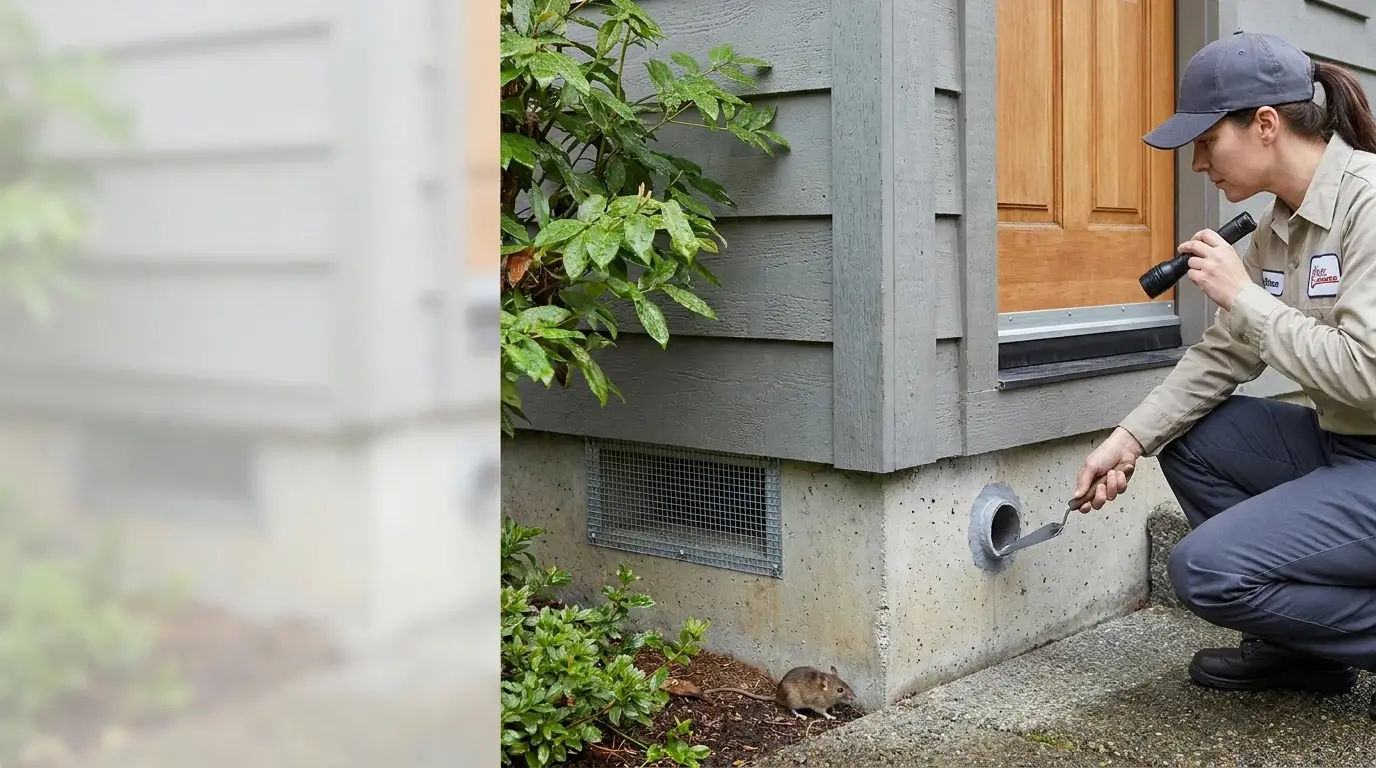
Rodents do not need a big hole to get in. A gap under a door, a damaged vent screen or the loose collar around a pipe can be plenty. In Renton’s older neighborhoods, where houses have settled and utilities have been added over decades, these small openings are some of the most common ways mice and rats move in as the weather turns cold and wet.
The good news is that these entry points are also some of the easiest to find and fix. This guide walks through door sweeps, vent screens and pipe gaps, with practical advice on materials and what to watch for.
Know the Size You Are Sealing
Two numbers guide most exclusion work:
- Mice can squeeze through gaps of about 1/4 inch.
- Rats can pass through gaps of about 1/2 inch.
A common rule of thumb: if you can fit a pencil through the gap, a mouse may be able to as well. Rodents can also chew to enlarge openings, so seal with materials they cannot easily gnaw, such as metal, and avoid relying only on soft ones. Our page on rodent exclusion gives more background.
Door Sweeps and Door Gaps
Exterior doors, and especially garage doors, are common entry points because the gap at the bottom is easy to overlook.
What to Check
- Light under the door. Stand inside on a bright day, or have someone shine a flashlight outside. Visible light means a gap.
- Worn or brittle sweeps. Rubber and vinyl crack, flatten and tear with age.
- Gaps at the corners and sides of the door frame.
- Garage door bottom seals that are torn, bunched or no longer touch the slab.
- Pet doors, which can be an open invitation.
How to Fix It
- Install a tight-fitting door sweep or threshold seal. Choose a durable product that fully closes the gap along the length of the door.
- Add metal protection. Where rodents are chewing at the bottom of a wood door, a metal kick plate or flashing can help.
- Replace garage door seals that are damaged, and check that the door closes flush with the floor. Uneven concrete may need attention.
- Seal the frame with weatherstripping or backed sealant where there are gaps at the sides.
- Close pet doors at night, or choose a model that locks securely.
Vent Screens
Vents let a building breathe, but they also create openings. Dryer vents, bathroom and kitchen exhaust vents, foundation vents, attic vents and soffit vents all deserve attention.
Common Problems
- Plastic or thin aluminum screens that rodents chew through
- Screens with holes or loose edges
- Missing covers or flaps that no longer close
- Foundation vents with mesh larger than 1/4 inch
- Gaps between the vent housing and the siding
How to Fix It
- Use hardware cloth. Heavy-gauge galvanized or stainless mesh is more chew-resistant than flimsy screening. A small mesh size, around 1/4 inch, helps stop mice.
- Fasten it securely. Use screws and washers or suitable fasteners, not just staples, so it cannot be pried away.
- Keep dryer and exhaust vents functional. Do not cover them with mesh that restricts airflow or catches lint. Choose proper vent covers designed for that equipment, and ask a professional if you are unsure.
- Seal around the housing where it meets the wall.
- Replace damaged louvers and covers instead of patching them with soft materials.
Soffit and gable vents higher up are important for roof rats, which climb well. See our page on roof rat removal in Renton for how they behave.
Pipe Gaps and Utility Penetrations
Anywhere a pipe, cable or wire passes through a wall, floor or foundation, there may be a gap around it. These are common under kitchen and bathroom sinks, around water heater and furnace connections, behind washers, and where utilities enter from outside.
What to Check
- Gaps under sinks where plumbing meets the wall or floor
- Openings around gas lines, AC lines and electrical conduit
- Cable and satellite entry points on exterior walls
- Holes in the foundation or crawl space for water and sewer lines
- Spaces where pipes pass between floors
How to Fix It
- Clean the area and remove debris, old stuffing and droppings. Wear gloves, ventilate and never dry sweep or vacuum droppings. Wet-disinfect instead, as covered in our guide to safe rodent dropping cleanup.
- Pack small gaps with steel wool or copper mesh.
- Cover with sealant such as caulk or a suitable foam to hold the filling in place and block drafts.
- Use metal for larger gaps. Cut hardware cloth or sheet metal to fit, and fasten it.
- Use an escutcheon or flange around pipes where practical, and seal the edges.
Foam alone is chewable, so pair it with metal. Be careful around gas lines, flues and anything involving heat or combustion, and ask a qualified professional before sealing near them.
Other Spots Worth Checking While You Are Out There
- Gaps where siding meets the foundation
- Chimney flashing and roof edges
- Weep holes in brick
- Crawl space doors and access panels
- Spaces behind downspouts and beneath decks
Our pages on crawl space services and attic cleanup cover issues that often follow from missed entry points.
Practical Tips
- Do a seasonal check. Autumn, before the rainy season drives rodents indoors, is a good time.
- Check at night too. A flashlight on the outside of the house in the dark reveals gaps differently.
- Look for rub marks. Dark greasy smudges around an opening show where rodents have been squeezing through.
- Seal after the animals are out. If rodents are inside, sealing first can trap them in walls. Confirm activity has stopped before closing the last openings.
- Use durable materials. Metal and quality sealants outlast soft fixes.
- Keep records. Note what you sealed and when, so you can recheck.
When to Call a Professional
Consider professional help if:
- You find droppings or gnawing but cannot identify how rodents are entering
- Gaps are high on the roof, in soffits or in tight crawl spaces
- The openings involve gas lines, flues or electrical equipment
- You have sealed things before and the activity returned
- There is significant damage or contamination
- You manage a multi-unit building with many possible entry points
Need Help Finding a Provider?
Renton Rodent Control is a referral service that connects homeowners, renters and property managers in Renton and King County with independent pest-control providers where coverage is available. Availability, services and pricing vary by provider and location. Request a Connection
Quick FAQ
Will a door sweep alone keep mice out? A good sweep closes one common entry point, but rodents may use others. Check vents, pipes and the roofline as well.
Can I use steel wool in a gap? Yes, as a filler in small gaps, but it can rust, so cover it with a durable sealant or metal.
Should I cover my dryer vent with mesh? Not with fine mesh, which can clog with lint. Use a vent cover designed for dryers, or ask a professional.
How often should I check these areas? At least once a year, and again after storms, remodeling or any sign of rodent activity.
This article is for general education only and is not a substitute for an on-site inspection or professional or medical advice. Renton Rodent Control is an independent referral service and does not provide extermination or repair services.