
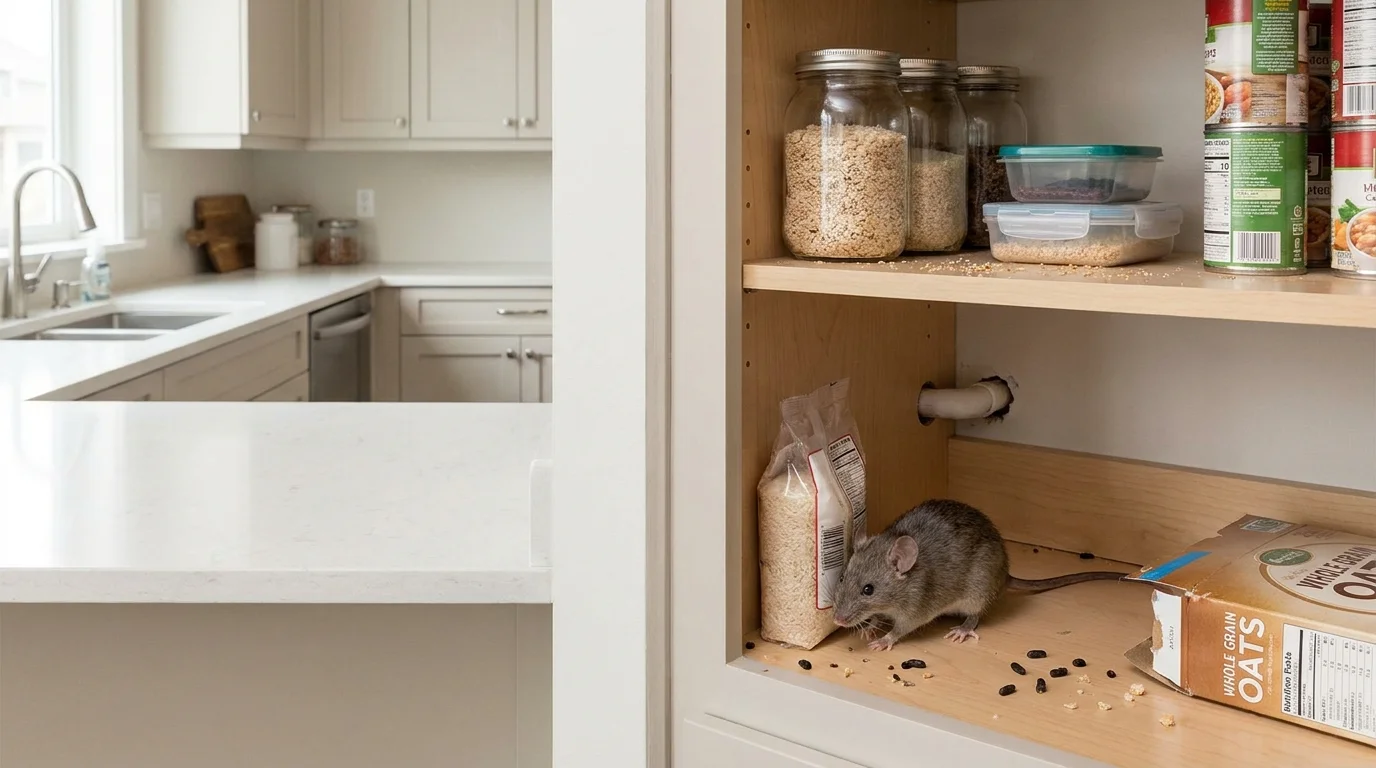
The kitchen is the most appealing room in the house for a mouse. It has food, water, warmth and plenty of quiet corners behind appliances and inside cabinets. Because mice are small, secretive and mostly active at night, the first signs are easy to miss.
This guide walks through what to look for in your kitchen and pantry, how to check the hidden spots, and what to do once you suspect activity. Catching the signs early makes the problem easier to manage and helps protect your food.
Droppings: The Most Common Clue
Mouse droppings are about 1/8 to 1/4 inch long, dark and pointed at the ends. Check:
- Along baseboards and in corners
- Inside and under cabinets and drawers
- Behind the stove, refrigerator and dishwasher
- On pantry shelves and in the back of food cupboards
- Under the sink around plumbing
Fresh droppings look dark and shiny. Older ones are dull and crumbly. If you are unsure whether they came from a mouse or a rat, our guide on mouse vs. rat droppings can help, though you can also see our mice control overview.
Gnawed Food Packaging
Mice chew through cardboard, paper, thin plastic and bags to reach grains, cereal, pasta, crackers, pet food and baking supplies. Look for small, ragged holes, shredded corners and spilled contents. Tiny bite marks on soap bars, candles or wooden items can also be signs. Discard any food that has been gnawed or contaminated.
Noises at Night
Scratching, scurrying or squeaking inside walls, under cabinets or above the ceiling at night is a classic sign. Mice are most active in the quiet hours after dark. Noises that move along walls or stop when you approach suggest animals traveling between nests and food.
Nests and Nesting Material
Mice build small, loose nests from shredded paper, cardboard, fabric, insulation and similar soft materials. In kitchens, check behind appliances, in the back of lower cabinets, in rarely used drawers and inside boxes in the pantry. If you find a nest, do not handle it with bare hands or sweep it up dry. Follow the safe-cleanup steps below.
Odors
A persistent musty or ammonia-like smell, especially in closed cabinets or behind appliances, can come from mouse urine and nesting. A stronger, unpleasant odor may mean an animal has died in a wall or void. See our page on dead rodent smell removal if that sounds familiar.
Grease Marks and Tracks
Mice tend to follow the same paths along walls, leaving dark, greasy smudges from the oils in their fur. Look along baseboards, around holes and near pipe openings. In dusty areas you may see tiny footprints or tail drag marks. A light dusting of flour or baby powder placed along a suspected path overnight can reveal tracks the next morning.
Signs of Entry Points
If mice are in the kitchen, they came in somewhere. Mice can squeeze through gaps of about 1/4 inch, roughly the width of a pencil. Check around:
- Pipes and gas lines where they pass through walls or floors under the sink
- Gaps behind the stove and dishwasher
- Door sweeps and gaps beneath exterior doors
- Vents, cable penetrations and foundation cracks
Our rodent exclusion page explains how openings are typically sealed.
Safe Cleanup Basics
Mouse waste can carry germs, so handle it carefully. See our full guide to safe rodent dropping cleanup.
- Do not dry sweep or vacuum droppings or nests.
- Ventilate the room before you start.
- Wear gloves and a respirator.
- Spray droppings and surfaces with disinfectant until wet, let it sit as directed, then wipe up with paper towels.
- Wash cabinets, shelves and countertops where food is prepared and stored.
- Bag waste, dispose of it and wash your hands thoroughly.
For questions about rodent-borne illness, consult the Washington State Department of Health and the CDC.
Practical Tips to Make Your Kitchen Less Inviting
- Store dry goods in glass, metal or thick plastic containers with tight lids.
- Keep pet food sealed and do not leave bowls out overnight.
- Wipe up crumbs and spills, and sweep or mop regularly.
- Take out trash and recycling frequently and keep bins covered.
- Fix dripping faucets and leaks under the sink.
- Pull appliances out occasionally to check and clean behind them.
- Reduce clutter and cardboard storage in cabinets and the pantry.
The Pacific Northwest’s cool, wet fall weather often pushes mice indoors, so a seasonal kitchen check in autumn is a good habit.
When to Call a Professional
Consider professional help if you see droppings repeatedly after cleaning, hear noises regularly, find droppings in more than one room, spot a live mouse during the day (which can suggest a larger population), or cannot locate how mice are getting in. Households with young children, pets, or people with health concerns may want help sooner rather than later.
Need Help Finding a Provider?
Renton Rodent Control is a referral service that connects homeowners, renters and property managers in Renton and King County with independent pest-control providers where coverage is available. Availability, services and pricing vary by provider and location.
Request a Connection
Quick FAQ
Is it safe to keep food that mice got into? It is safest to discard opened food that shows gnawing, droppings or other contamination.
Can mice live in a clean kitchen? Yes. Cleanliness helps, but mice only need small amounts of food and a sheltered spot.
How many mice are in my home if I see one? It is hard to tell. One sighting can mean several animals, since mice breed quickly and stay hidden.
Where can I find more answers? See our FAQ page.
This article is for general education only and is not a substitute for an on-site inspection or professional or medical advice. Renton Rodent Control is an independent referral service and does not provide extermination or repair services.