
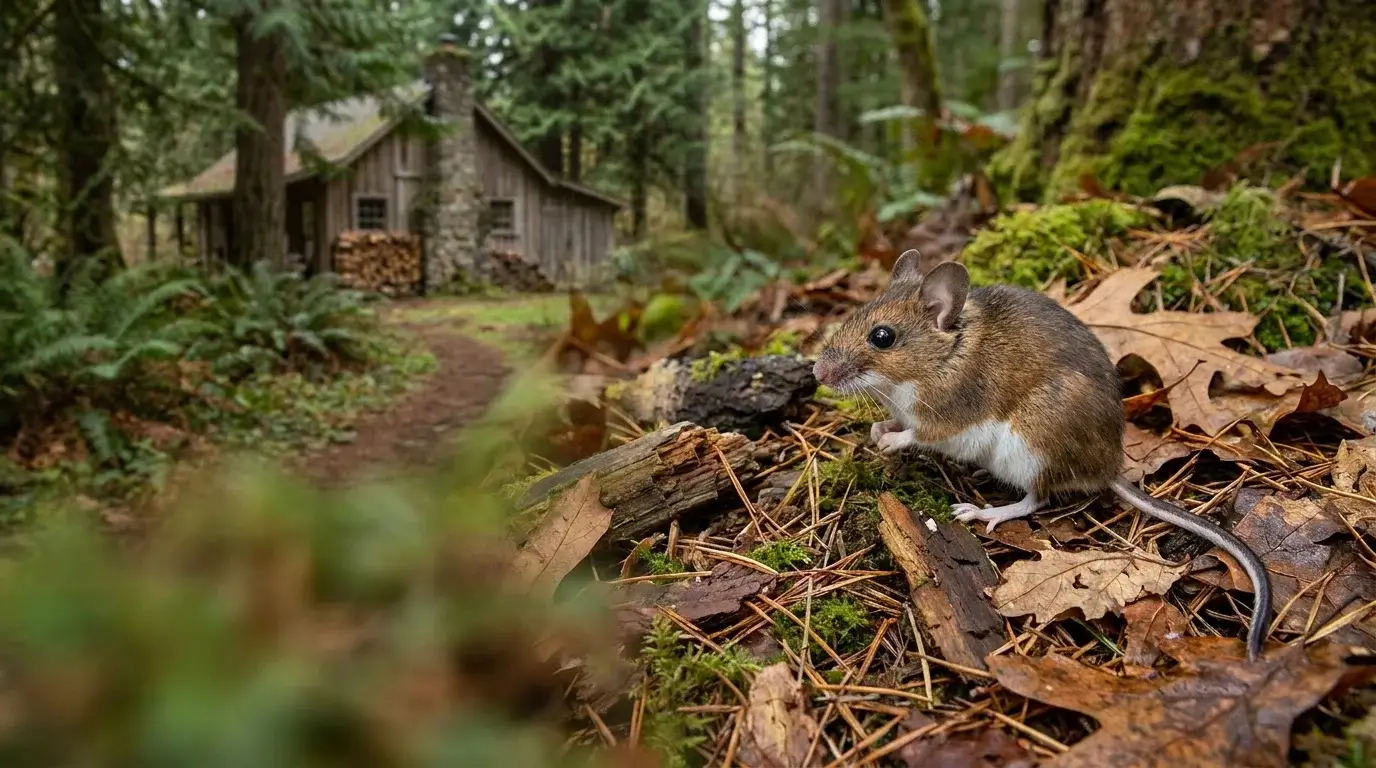
Deer mice are the native mice of Washington. Unlike the house mouse, which has lived alongside people for centuries, the deer mouse evolved in forests, meadows and brush, and many still live there. Homes near greenbelts, wooded lots, farmland and the edges of King County neighborhoods are where they most often cross paths with people.
They are worth understanding for one main reason: deer mice are the primary carrier of the hantavirus that causes hantavirus pulmonary syndrome in the Pacific Northwest. Most deer mice are not infected, but knowing the risk and the safe way to handle cleanup makes a real difference.
What a Deer Mouse Looks Like
Deer mice are easy to confuse with house mice at a glance, but a few features set them apart.
- Two-toned fur. Brown or tan on the back and sides, sharply white on the belly and feet.
- Large eyes and ears. They look noticeably bigger and more rounded than a house mouse’s.
- Bicolor tail. Darker on top and lighter underneath, often covered with fine hair.
- Size. Roughly similar to a house mouse, with a body about 2 to 4 inches long.
Like house mice, deer mice can squeeze through gaps of about 1/4 inch. Their droppings are similar in size to a house mouse’s, about 1/8 to 1/4 inch and pointed, so droppings alone do not prove which species is present. See our deer mouse control page and the house mouse page for a side-by-side feel.
Where Deer Mice Live
Deer mice are adaptable and found in many habitats across Washington, from forests to shrub-steppe to suburban edges.
Outdoors
They nest in hollow logs, stumps, brush piles, rock crevices, old burrows and dense ground cover. In a typical Renton-area yard, woodpiles, stacked lumber, overgrown blackberry thickets and compost areas offer ideal shelter and food.
In and around buildings
When weather turns cold and wet, deer mice look for dry, sheltered, quiet spaces. Common places include:
- Sheds, detached garages and workshops
- Cabins and seasonal homes that sit unused for weeks
- Crawl spaces and the spaces under decks
- Attics, wall voids and stored boxes
- Vehicles, RVs and boats that are parked for long periods
Unlike house mice, deer mice are less likely to stay indoors year-round. They often come and go, which is one reason sealing outside entry points matters. Our crawl space and attic cleanup pages cover two spots where activity often hides.
Why Deer Mice Matter for Health
The key concern is hantavirus. Deer mice can carry Sin Nombre virus without appearing sick. The virus is shed in their urine, droppings and saliva.
- How people are exposed. The best-established route is breathing in tiny airborne particles stirred up from contaminated droppings, urine or nesting material, which is why sweeping and vacuuming dry droppings is discouraged. Contact with a bite or with contaminated surfaces can also be a concern.
- What it causes. Hantavirus pulmonary syndrome is a serious respiratory illness. Early symptoms can resemble the flu, including fever, fatigue and muscle aches, and may progress to breathing difficulty.
- Spread between people. The Sin Nombre virus found in North America is not known to spread from person to person.
- Reality check. Human cases are uncommon, and most deer mice never come into contact with people. The risk rises in enclosed, poorly ventilated spaces with heavy rodent contamination, such as a closed-up cabin or shed.
For current guidance, symptoms and what to do if you have been exposed, consult the Washington State Department of Health and the CDC. Anyone who develops fever, severe aches or trouble breathing after possible rodent exposure should contact a healthcare provider promptly and mention the exposure. Our hantavirus guide and rodent species and diseases pages offer more background.
Safe Cleanup Around Deer Mice
Because the risk comes from airborne particles, the way you clean matters more than how fast you clean.
- Ventilate first. Open doors and windows and leave the space for a while before starting.
- Do not dry sweep or vacuum. This lifts contaminated dust into the air.
- Protect yourself. Wear gloves and a properly fitted respirator.
- Wet everything down. Spray droppings and nesting material with a disinfectant and let it sit before wiping up with paper towels.
- Dispose and wash. Bag the waste, remove gloves carefully and wash your hands thoroughly.
Our guide to safe rodent dropping cleanup walks through the process in detail. Heavy contamination, such as a large amount of droppings or nesting in insulation, is a good reason to bring in a professional.
Reducing Deer Mouse Activity Around Your Home
- Seal outside gaps. Close openings of 1/4 inch or more with hardware cloth, sheet metal or mortar. See rodent exclusion.
- Keep woodpiles away from the house. Stack firewood off the ground and several feet from walls.
- Cut back brush. Trim shrubs, vines and tall grass near the foundation.
- Store food securely. Pet food, birdseed and garden seed should be in sealed containers.
- Check the sheds and garages. Inspect regularly and avoid leaving boxes and fabric piled on the floor.
- Air out unused buildings. Before opening a closed-up cabin or shed, ventilate it first and look for signs of rodents.
When to Call a Professional
Consider professional help when:
- You find droppings or nests in an attic, crawl space or wall void.
- Activity continues after you have sealed the obvious entry points.
- A shed, garage or cabin has been heavily contaminated.
- You are not sure whether you are dealing with deer mice, house mice or rats.
- Someone in the household is vulnerable to illness.
A professional can inspect the whole property, identify the species, locate entry points and advise on trapping, exclusion and cleanup.
Need Help Finding a Provider?
Renton Rodent Control is a referral service. We do not perform pest control ourselves. We connect homeowners, renters and property managers in Renton and King County with independent pest-control providers, where coverage is available. Provider availability, services and pricing vary.
Request a Connection
Quick FAQ
Do all deer mice carry hantavirus? No. Only some do, but it is not possible to tell by looking, so treat droppings and nests with caution.
Can hantavirus spread from person to person? The hantavirus found in North America associated with deer mice is not known to spread between people.
How do I tell a deer mouse from a house mouse? Look for a white belly and feet, larger eyes and ears and a two-colored tail. An on-site inspection can confirm the species.
Are deer mice only a problem in the countryside? No. Homes near greenbelts, wooded lots and open space in King County can see them too, especially in sheds, garages and crawl spaces.
Disclaimer: This article is for general education and does not replace an on-site inspection or professional or medical advice. Renton Rodent Control is an independent referral service and does not provide extermination or repair services.