
Home / SeaTac, WA
✔ INDEPENDENT SPECIALIST MATCHING NETWORK
Rodent Control in SeaTac, WA
Noticing signs of mice or rats at your SeaTac property? Explore common rodent concerns, practical prevention measures, and options for connecting with independent pest-control providers. Available services depend on your location, property needs, and provider coverage.
Property-specific options · Independent providers · Availability varies
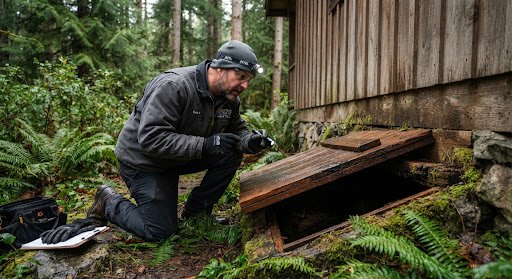
Documentary Field Assessment
Pacific Northwest Residential Property Inspection · Foundation Perimeter
LOCAL TOPOGRAPHY & STRUCTURAL REALITIES
Rodent Concerns for SeaTac Homes and Properties
SeaTac occupies a critical geographic position in south King County, bounded by Seattle-Tacoma International Airport (SEA), State Route 99 (International Boulevard), and Interstate 5. The close juxtaposition of high-density air-cargo hubs, long-term airport parking, commercial hospitality strips, and historic residential pockets like Angle Lake, McMicken Heights, Bow Lake, and Riverton Heights creates specialized microclimates for rodent nesting. Constant transit activity paired with Puget Sound dampness drives rodents toward residential crawl spaces and attic insulation during cold, wet fronts.
Transit & Logistics Corridors
High density of commercial freight operations, airport food catering, and transit terminals provide substantial food waste anchors that elevate surrounding neighborhood rodent pressures.
Common Area: Intl Blvd & Freight Corridors
Common Entry Vulnerabilities
Crawl space access hatches, missing foundation screens, AC line penetrations, and warped garage door weatherstripping present standard mechanical breach points.
Vulnerability: Sub-area access hatches
Subfloor & Attic Cavities
Marine air and consistent rainfall compel rodents into warm fiberglass batting and damp crawl spaces under McMicken Heights and Angle Lake mid-century ramblers.
Threat: Insulated thermal envelopes
Independent Evaluations
Objective on-site reviews performed by licensed Washington State independent contractors serving SeaTac help distinguish between incidental visits and active nesting.
Scope: Full structural perimeter inspection
ISSUE IDENTIFICATION
Rodent Problems You May Need Help With
Tailored assessment channels allow you to target specific structural, sanitary, or trapping requirements with independent specialists.
Mouse Activity
Small rice-sized droppings, light scratching sounds inside sheetrock walls, nibbled food boxes in pantries, and shredded insulation or paper caches.
Rat Activity
Thick capsule-like droppings, burrow mounds along foundations or sheds, chewed wiring or PEX pipes, and heavy nocturnal scurrying along ceilings.
Rodent Entry Points
Gaps surrounding crawl vents, pipe penetrations, missing mortar, roof transitions, and degraded weatherstripping that require durable mechanical sealing.
Attic & Crawl Space Concerns
Torn vapor barriers, contaminated fiberglass, pheromone trail build-up, and lingering odors requiring evaluation for cleanup or exclusion restoration.
DIAGNOSTIC FIELD GUIDE
How to Recognize Possible Rodent Activity
Check your SeaTac property against these primary physical indicators documented during residential property surveys.
Droppings Along Runs
Concentrations near food pantries, under sinks, back of lower cabinets, or behind baseline furniture.
Late-Night Wall Sounds
Scratching, tapping, or light squeaking inside walls or above ceilings, most prevalent between 11 PM and 3 AM.
Structural Gnaw Marks
Fresh light-colored tooth markings on baseboards, wood studs, plastic water piping, or electrical cable jackets.
Shredded Nesting Debris
Bundles of torn attic insulation, cardboard fragments, shredded paper towels, or furniture batting tucked in quiet voids.
Chewed Food Packaging
Clean-cut corner holes in pantry cereal boxes, dry pet food sacks, bird seed containers, or stored pantry supplies.
Foundation Excavations
Freshly dug soil tunnels or 2-to-3 inch holes adjacent to concrete foundation stem walls, patio slabs, or garden outbuildings.
Persistent Pungent Musky Odors
Distinct stale, ammonia-like scent patterns clinging to poorly ventilated utility closets, sub-basement corners, or ceiling access points.
Diagnostic Notice
Noting one or more of these signs confirms potential presence but cannot establish total colony size, species classification, or hidden entry runways. A structured physical assessment by an independent technician is recommended before implementing exclusion work.
VULNERABILITY MAPPING
Where Rodents May Be Entering Your Property
In typical SeaTac residential architecture—including 1960s daylight basements, suburban ranches, and newer townhome developments—rodents exploit predictable architectural intersections.
Inside the Property Envelope
Kitchen & Pantry
Unsealed gaps where drain lines, supply PEX, and dishwasher lines penetrate back drywall; warm hollows behind refrigerators and ranges.
Garage & Storage Utilities
Worn bottom threshold gaskets on vehicle rollup doors, unsealed fire-door thresholds into living spaces, and stored cardboard storage piles.
Attic & Roofline
Screenless soffit vents, loose ridge caps, intersections between roof dormers, and uncaulked fascia boards offering roof rat climbing access.
Crawl Space & Foundation
Aged crawl access doors, rust-compromised crawl vents, unsealed subfloor plumbing chases, and shrinkage cracks in older concrete.
Hollow Walls & Duct Chases
Main HVAC trunk lines running through ceiling joists, chimney chases, and plumbing stack chases acting as interior highway runs.
Around the Building Perimeter
Exterior Doors & Sweeps
Entry doors lacking commercial-grade nylon-brush or neoprene sweeps; damaged corner jamb pads on back service doors.
Foundation & Siding Transitions
Open horizontal expansion gaps where cedar shake, T1-11, or vinyl siding overlaps the mudsill atop concrete foundation blocks.
Vent Screen Integrity
Damaged wire mesh screening on crawl vents. Exclusion standard requires intact 1/4-inch heavy-gauge galvanized hardware cloth.
Utility & Heat Pump Line Entries
Oversized holes cut for electrical conduits, heat pump refrigerant copper lines, gas pipe meters, and exterior water spigots.
Perimeter Shrubbery & Waste Storage
Overgrown evergreen shrubs brushing siding, municipal roll carts stored against wall bases, and uncovered compost bins.
Inspection Scope Note: Not every home requires intervention across all ten structural zones. An independent assessment isolates specific active vulnerabilities to prevent unnecessary expenditure.
SPECIES DIFFERENTIATION
Identifying the Rodent
Correct identification governs trapping mechanics, exclusion mesh sizing, and sanitary protocols.
FAMILY MURIDAE / CRICETIDAE
Mice (House & Deer Mice)
Body Length
2.5 to 4 inches (slender body)
Dropping Profile
1/8 to 1/4 inch, pointed ends
Entry Clearance
1/4 inch (dime-sized opening)
Nesting Locations
Wall insulation, storage boxes, stove drawer bases
PNW Health Note: Deer Mice (Peromyscus maniculatus)
Deer mice (white belly and feet, bicolored tail) are native throughout King County greenbelts and act as the recognized primary reservoir for Hantavirus Pulmonary Syndrome (HPS) in Washington State.
GENUS RATTUS
Rats (Norway & Roof Rats)
Body Length
7 to 10 inches (robust, heavy build)
Dropping Profile
1/2 to 3/4 inch, blunt or spindle-ended
Entry Clearance
1/2 inch (quarter-sized opening)
Nesting Locations
Sub-slab burrows (Norway) or high attics/roofs (Roof)
Behavioral Distinction:
Norway rats prefer subfloor crawl spaces and burrow beneath foundations, while Roof rats use tree branches and power cables to enter soffits and upper attic spaces.
PROACTIVE SANITATION & MECHANICAL CONTROL
Practical Ways to Reduce Rodent Access
Follow these structured mechanical habits recommended by King County environmental health standards to discourage rodent populations from colonizing your home envelope.
Airtight Containers
Store pantry grains, flour, and bulk dog/cat kibble in heavy plastic, thick glass, or metal canisters.
Zero accessible aroma
Secured Carts
Keep exterior city waste and compost roll carts tightly latched and positioned away from foundation edges.
Tight-sealing lids
Scrap Management
Clear fallen apples, plums, or berry garden drop immediately; sweep cooking grease behind stove units.
Calorie disruption
Clutter Minimization
Replace corrugated cardboard boxes in basements and garages with sealable plastic tote containers.
Harborage reduction
Threshold Checks
Inspect entry door thresholds for daylight leaks; install heavy sweep plates to stop entry under doors.
Mechanical seal
1/4-Inch Hardware Cloth
Ensure all sub-floor crawl space vent grilles are screened with unbroken 1/4-inch galvanized mesh.
Sub-area protection
Woodpile Elevation
Stack firewood cords at least 18 inches off the ground and a minimum of 20 feet away from living structures.
Perimeter clearance
Professional Exclusion
Consult an independent professional regarding copper mesh, stainless steel escutcheons, and elastomeric sealants.
Long-term barrier
MUNICIPAL GUIDANCE
King County Public Health Rodent Prevention Guidelines
Explore comprehensive county standards for municipal waste disposal and residential property maintenance.
INDEPENDENT NETWORK ARCHITECTURE
How the Connection Process Works
A clear, step-by-step framework connecting SeaTac property owners with qualified, licensed independent rodent specialists.
01
Submit Your Request
Share your SeaTac property location, specific neighborhood (e.g., Angle Lake, Bow Lake), and describe primary rodent observations.
02
Provide Property Details
Clarify structural details: crawl space access, attic access, attached garages, past trapping attempts, or pet safety concerns.
03
Review Potential Options
Intake criteria evaluate your requirements against current independent provider availability and service capabilities in South King County.
04
Connect With a Provider
Your information is referred directly to an independent, licensed pest control operator serving the SeaTac municipal boundary.
05
Discuss Assessment & Services
The matched provider discusses inspection schedules, structural diagnostic fees, and specific exclusion scopes directly with you.
06
Coordinate Directly
Agreed treatment, mechanical exclusion repairs, and ongoing monitoring visits are delivered and billed directly by the independent specialist.
Submitting a request does not guarantee contractor matching, booking confirmation, or particular operational outcomes.
SOUTH KING COUNTY DIRECTORY
Explore Rodent Service Options in SeaTac
Independent providers in our referral directory cover the full range of residential and commercial structural rodent services:
Rat Control & Removal
Targeted mechanical trapping programs for Norway rats and Roof rats, avoiding uncontained rodenticides in living areas.
Mouse Control
Precision bait stations and indoor capture arrays calibrated for fast breeding cycles of domestic house mice and deer mice.
Rodent Proofing & Exclusion
Durable structural sealing of foundation vents, siding gaps, fascia boards, and utility wall penetrations using metal mesh and sealant.
Attic Cleanup Assessment
Evaluation of soiled insulation, biohazard sanitization requirements, and air duct sealing following prolonged rodent infestation.
Crawl Space Concerns
Inspection of compromised vapor barriers, wet ground moisture issues, falling insulation batting, and subterranean rat burrow runs.
Dead Rodent Odor Investigation
Specialized locating and removal of expired rodents trapped inside wall cavities, HVAC sub-ducts, or inaccessible dropped ceilings.
Rodent Prevention Guidance
Comprehensive site-specific audits covering landscape trimming, dumpster management for multi-family units, and building envelope upkeep.
PUBLIC HEALTH SAFETY ADVISORY
Take Care When Cleaning Rodent Droppings
Disturbing dried rodent droppings, urine, or nesting materials can aerosolize infectious pathogens—including Hantavirus, Lymphocytic Choriomeningitis (LCMV), and Leptospirosis. Strictly follow standard health protocols:
DO NOT Sweep or Vacuum
Dry sweeping or vacuuming launches microscopic viral particles directly into your home's air column.
Ventilate Area First
Open exterior doors and windows to cross-ventilate the contaminated enclosed space for at least 30 minutes before cleaning.
Wear PPE Protection
Wear non-porous rubber or nitrile gloves and an airtight N95 or P100 respirator to safeguard respiratory passages.
Wet Soak Disinfection
Thoroughly spray droppings with an EPA-registered disinfectant or a 1:10 household bleach solution; allow 10 minutes wet soak.
Double-Bag Disposal
Wipe up with disposable paper towels, seal in a heavy-duty plastic garbage bag, place in a second bag, and wash hands thoroughly.
Large Attic Cleanups
For heavily soiled crawl space vapor barriers or attic fiberglass batting, professional hazardous decontamination is strongly advised.
TAILORED REFERRAL CHANNELS
Rodent Referral Options for Different Properties
Different property arrangements require distinct communication, authorization protocols, and technical methodologies.
Homeowners
Complete property envelope assessments, whole-home exclusion guarantees, crawl space repairs, and ongoing perimeter bait station maintenance.
Single-Family Preservation
Renters & Tenants
Guidance on documenting physical evidence, recognizing safe chemical practices, and delivering written notifications under RCW 59.18.060.
Documentation Support
Landlords & Managers
Portfolio-level multi-unit diagnostics, exterior dumpster perimeter management, coordinated tenant notifications, and common-area structural exclusion.
Multi-Family Compliance
Commercial Facilities
Logistics warehousing, airport cargo docks, food-service hospitality along Hwy 99, and strict health audit compliance logs.
Commercial Logistics
ANSWERS & TRANSPARENCY
SeaTac Rodent Control FAQs
Straightforward answers regarding our referral service, local SeaTac pest dynamics, costs, and inspection scope.
The primary indicator is dropping dimensions. Mouse droppings are tiny (1/8–1/4 inch) with pointed tips, similar to grains of black rice. Rat droppings are significantly larger (1/2–3/4 inch) with blunt rounded ends. Heavy thumping or scurrying late at night typically points to rats, while light scratching inside sheetrock frequently indicates mice.
Yes. Our network covers all residential neighborhoods within the City of SeaTac (including Angle Lake, McMicken Heights, Bow Lake, and Riverton Heights), as well as adjacent South King County areas like Tukwila, Burien, and Des Moines. Available provider options depend on current schedule capacity and your specific property type.
Minor incidental mouse activity can sometimes be addressed by homeowners through disciplined food hygiene, clearing clutter, and setting basic snap traps. However, recurring activity, signs of rats, chewed wiring, or nesting within crawl spaces and attics generally requires licensed structural exclusion and targeted trapping to stop the reproductive cycle.
Yes. Mice can compress their bodies and slip through gaps as small as 1/4 of an inch (the diameter of a standard pencil or dime). Full-grown rats require just 1/2 of an inch (roughly the size of a quarter). Gaps around exterior water spigots, cable entries, and vent frame corners are typical entry paths.
No. Renton Rodent Control is an independent matching and referral directory. We connect homeowners and property managers with verified, independent pest control operators and structural exclusion contractors. All inspection agreements, pricing, and warranties are contracted directly with the independent provider.
Costs vary based on structural scope. A basic diagnostic assessment and initial trapping setup typically ranges from $200 to $450. Comprehensive exclusion (sealing crawl vents, pipe penetrations, roof dormers) and attic sanitization or insulation replacement depend entirely on square footage and infestation severity. Your matched independent provider will quote exact terms after inspecting.
Yes. Many independent specialists in our network specialize in sub-area remediation, including vapor barrier replacement, damaged fiberglass removal, odor elimination, and installing heavy-gauge hardware cloth over vulnerable crawl space foundation vents.
No responsible professional can guarantee zero rodent attempts in the future because rodents are a permanent part of the Pacific Northwest ecosystem. However, high-quality physical exclusion (sealing entry breaches with steel and concrete) dramatically reduces the likelihood of re-infestation. Providers often offer renewable warranties on their specific mechanical exclusion seals.
KNOWLEDGE HUB & DIRECTORY
Explore More Rodent Resources
Access specific service overviews, regional guides, and Washington state health information.
Rat Removal in Renton
Norway & roof rat protocols
Mice Control in Renton
House & deer mouse plans
Rodent Proofing & Exclusion
Hardware cloth & sealing
Attic Cleanup
Sanitization & insulation
Crawl Space Concerns
Vapor barriers & vents
Species & Diseases
PNW biological profile
Hantavirus Safety
Deer mouse health guidelines
King County FAQ
Municipal regulations & laws
Looking for Rodent-Control Options in SeaTac?
Tell us what you have noticed at your SeaTac property. Submit a request to explore a connection with an independent pest-control provider, subject to service coverage and availability.
Independent provider pricing, scheduling, and service capabilities vary. Submitting a referral request does not create a contract for service.